
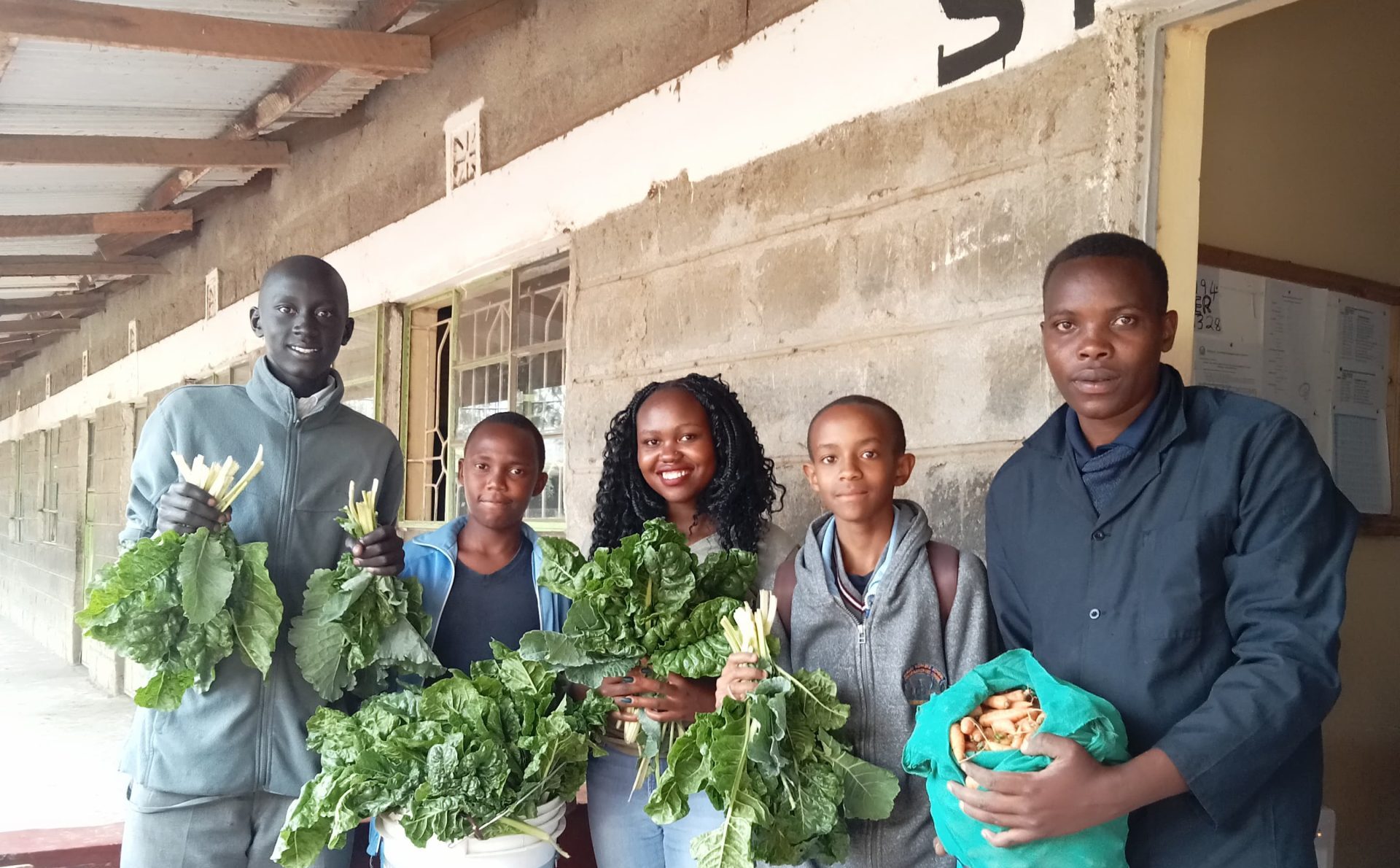
Tucked away in the vibrant grounds of Workers Primary School, a quiet revolution is taking place led not by seasoned farmers or agricultural experts, but by young pupils with muddy hands and hopeful hearts. A Slow Food Garden project is flourishing beyond expectations. What began as a humble initiative to introduce students to agroecology has grown into a living classroom where diversity, sustainability, and innovation bloom.
During our recent follow-up visit to the school, we were met with a heartwarming scene. The once-empty patch of land has transformed into a thriving garden, bursting with life and lessons. Rows of spinach, pumpkins, colored maize, kales, sweet potatoes, bananas, beans, and other indigenous crops stand as silent proof of what can be achieved when knowledge, care, and community come together.
But this garden is doing more than feeding bellies—it’s feeding minds and dreams.

Recently, the pupils harvested carrots and potatoes, which they sold to local vendors for Ksh 2,000. What they did next was remarkable: instead of spending it all, they reinvested part of the money back into the garden—buying seeds and other inputs—while saving the rest. For these young farmers, this wasn’t just a harvest. It was a lesson in sustainability, planning, and economic empowerment.
Beyond planting and harvesting, the pupils have embraced agroecological practices, including the preparation and use of biopesticides made from locally available plants. These natural solutions help protect their crops without relying on harmful chemicals—another step toward a healthier, more resilient food system.
One particularly beautiful part of this journey began during Terra Madre Day, an annual celebration organized by Slow Food Kenya. A teacher from Workers Primary School attended the event and acquired red and yellow maize seeds—varieties that are not just visually striking but also nutritionally rich. Together with the pupils, he planted the seeds in the school garden, and now, the maize is nearly ready for harvest.
Colored maize varieties, such as red and yellow maize, are known for their high antioxidant content, including carotenoids and anthocyanins, which support better immunity and overall health. They also hold cultural significance and offer greater genetic diversity, making them an important part of efforts to preserve indigenous food systems.
In addition, the pupils have been learning the art of value addition, such as drying vegetables to preserve their harvest and extend shelf life. This simple yet powerful practice boosts both food security and income potential—while reinforcing traditional knowledge.
This small but mighty garden is a testament to what is possible when agroecology meets education. It reminds us that change doesn’t always begin in boardrooms or capital cities—it often begins in a classroom, in a garden, with a child holding a watering can.
The story of Workers Primary School is not just about vegetables and maize. It’s about resilience, creativity, and the power of hands-on learning. It’s a model that other schools can look to for inspiration—proving that school gardens can become living classrooms, business incubators, and sources of community pride.
Indeed, from the soil of this school, something much greater is growing.